💔😱 HORROR ON THE TARMAC: A Frontier plane’s engine shredded…See more
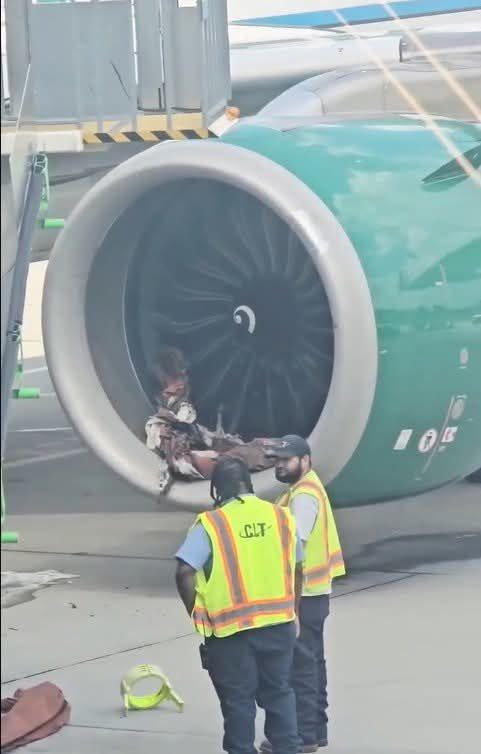
Frontier Airlines Airbus A320 Engine Incident Causes Major Delays at Charlotte Douglas International Airport
On August 16, 2025, an unexpected ground incident involving a Frontier Airlines Airbus A320 aircraft caused significant operational disruption at Charlotte Douglas International Airport, leaving passengers stranded for hours and raising renewed attention to ramp safety procedures. The aircraft, registered as tail number N365FR, suffered severe engine damage when a ground air-conditioning hose was accidentally sucked into its #1 engine during pre-departure preparations.
The affected flight, designated F93134, was scheduled to travel from Charlotte to LaGuardia Airport in New York. However, the unexpected mechanical failure rendered the aircraft inoperable, forcing airline personnel to remove the plane from service and arrange alternative travel for passengers. The disruption ultimately resulted in a delay of approximately nine hours before travelers could finally depart on a replacement aircraft.
Timeline of the Frontier Airlines Engine Incident
The incident occurred during routine ramp operations as the Airbus A320 was being prepared for departure. Ground air-conditioning hoses are commonly used at airport gates to provide cooled air to the aircraft cabin while engines are off, ensuring passenger comfort and reducing unnecessary fuel consumption.
According to preliminary reports, the hose remained positioned too close to the aircraft’s left engine during preparations. At some point during the startup or testing process, the powerful suction generated by the turbofan engine pulled the hose inward. Within seconds, the flexible hose was drawn into the engine intake and shredded by the rapidly spinning fan blades.
Ramp personnel immediately noticed the malfunction, and ground crews halted further engine activity. Airport operations teams and airline maintenance personnel quickly secured the area to prevent additional hazards and began evaluating the extent of the damage.
Extent of Aircraft Damage and Safety Protocols
When foreign objects are ingested into jet engines, the consequences can be severe. The shredded hose fragments likely caused damage to the engine’s internal fan blades, compressor components, and possibly other critical systems. Even minor internal damage can compromise engine performance and safety.
As a result, the aircraft was declared “non-serviceable,” meaning it was no longer safe for passenger operations until thorough inspection, repair, or engine replacement could be completed.
Airlines follow strict Federal Aviation Administration (FAA) safety regulations when such incidents occur. Maintenance crews must perform detailed inspections, including:
-
Visual examination of fan blades and intake areas
-
Internal borescope inspections
-
Structural integrity checks
-
Functional performance testing
If damage exceeds acceptable safety limits, the engine must be repaired or replaced entirely before the aircraft can return to service.
Frontier Airlines maintenance teams quickly determined that the aircraft could not safely operate its scheduled flight, triggering the airline’s contingency procedures.
Passenger Impact and Extended Delay
Passengers onboard Flight F93134 experienced significant inconvenience due to the incident. Originally scheduled for a routine flight from Charlotte to New York City, travelers instead faced hours of uncertainty while airline officials worked to resolve the situation.
Once the aircraft was officially removed from service, Frontier Airlines began coordinating replacement transportation. However, securing an alternative aircraft and crew can be logistically challenging, especially during peak travel periods.
Passengers were eventually transferred to a replacement Airbus A320. After approximately nine hours of delay, the flight finally departed Charlotte and continued its journey to LaGuardia Airport.
While Frontier Airlines did not report any injuries, the delay caused missed connections, disrupted travel plans, and frustration among passengers.
Importance of Ramp Safety and Ground Handling Procedures
This incident highlights the critical importance of proper ground handling procedures and strict adherence to safety protocols during aircraft preparation.
Ramp operations involve numerous pieces of equipment, including:
-
Air-conditioning hoses
-
Fuel lines
-
Power cables
-
Baggage loaders
-
Service vehicles
Each piece of equipment must be carefully positioned and removed before engine startup.
Jet engines generate tremendous suction force. Even relatively small objects can be pulled into an engine from several feet away. This risk is well-known in aviation and is commonly referred to as Foreign Object Damage (FOD).
Foreign Object Damage can result in:
-
Expensive engine repairs
-
Operational delays
-
Flight cancellations
-
Safety risks
Airlines and airports invest heavily in staff training, safety procedures, and inspections to prevent such incidents.
Financial and Operational Impact on Frontier Airlines
Engine damage incidents can be extremely costly for airlines. A modern turbofan engine may cost several million dollars, and repairs alone can range from tens of thousands to millions depending on severity.
In addition to repair costs, airlines face indirect financial losses, including:
-
Passenger compensation
-
Crew rescheduling costs
-
Replacement aircraft deployment
-
Operational disruptions
-
Potential reputation damage
Frontier Airlines, known for its ultra-low-cost model, operates a large fleet of Airbus A320 family aircraft. Maintaining high aircraft utilization is essential to its business model, meaning unexpected maintenance events can significantly affect operations.
Aviation Industry Perspective on Ground Equipment Incidents
Although relatively rare, ground equipment ingestion incidents do occur across the aviation industry. Aviation authorities and airlines continuously improve safety protocols to reduce risks.
Common prevention measures include:
-
Clear communication between ground crews and pilots
-
Mandatory safety zones around engines
-
Visual safety inspections before startup
-
Equipment removal confirmation procedures
-
Ramp safety training programs
Airports also conduct routine Foreign Object Debris inspections to ensure runways and ramp areas remain free of hazards.
Aircraft Replacement and Passenger Recovery Process
Once the damaged aircraft was declared non-operational, Frontier Airlines initiated its aircraft recovery procedures. This process involves locating an available aircraft, ensuring crew availability, and coordinating with airport authorities for gate assignments.
Replacement aircraft must undergo safety inspections and preparation before boarding passengers. Once ready, passengers are reboarded and flights resume normal operations.
While the delay was lengthy, Frontier Airlines successfully transported passengers safely to their destination.
No Injuries Reported, Safety Remains Top Priority
Despite the seriousness of the engine damage, no passengers or crew members were injured during the incident. This outcome reflects the effectiveness of aviation safety systems and rapid response procedures.
Aircraft engines are designed with safety protections, and aviation personnel are trained to respond immediately when abnormalities occur.
Safety remains the aviation industry’s highest priority, and incidents like this are thoroughly investigated to prevent recurrence.
Conclusion: Lessons from the Frontier Airlines Airbus A320 Incident
The Frontier Airlines Airbus A320 engine incident at Charlotte Douglas International Airport serves as a powerful reminder of the importance of ramp safety and operational vigilance. While no injuries occurred, the ingestion of a ground air-conditioning hose caused severe aircraft damage and significant travel delays.
The airline’s response—removing the aircraft from service, conducting safety inspections, and arranging a replacement flight—demonstrates standard aviation safety protocols designed to protect passengers.
Although disruptive, such incidents contribute to ongoing improvements in aviation safety. Through continued training, stricter procedures, and advanced safety monitoring, airlines and airports work to minimize risks and ensure safe travel for millions of passengers worldwide every day.